Here is the latest update from our Global Outreach ministry partners in Hungary, written and sent by Larry Winckles.
Jackson Free Methodist's (JFM) Global Outreach has four partnerships, having two located in Europe (Set Free Movement in Hungary and the St. Johns Home in Bulgaria).
Even though JFM does not have any ministries or missionaries directly in Ukraine, our partners do collaborate with church planting and other non profit organizations in Ukraine. Our partners are actively engaging to help the refugees that are starting to come into Hungary.
Picture of refugees, volunteers and local police in train station in Budapest
Larry helps explain in this letter below what they are witnessing in Hungary with the Ukrainian refugees. Larry also explains how we can support. If you are called to help, here are a few ways that you can act:
 Pray! Praying is the MOST we can do and to support our partners.
 Need some scripture guidance? Check out 1 John 5:14, 2 Corinthians 1:11, Philippians 1:18-21
 Give Electronically or by check payable with:
 "Bishop Crisis Response Fund" in the memo.
Collection holders are in the sanctuaries at JFM
Funds mailed to: 2829 Park Drive, Jackson MI 4920
 Follow @jfmglobal or JFM Global Outreach for updates
Report on the Refugee Crisis in Budapest – February 28, 2022
Today I visited the Nyugati Railway Station in Budapest to assess the refugee situation there. This is the station
where trains arrive that are coming from the northeast, in the direction of the Hungarian/Ukrainian border. Trains
arrive from Nyíregyháza on an hourly basis. I was there for about a half an hour after a train had arrived and stayed
until about a half an hour after the next train arrived.
(map added for reference points)
These are my observations.
1. The Compassionate Services of the Hungarian Reformed Church has
been present at the train station since the second day of the war.
They are well-staffed and well-equipped. Their workers wear
distinctive green jackets with the name of the service prominently
displayed. They offer food, water, and hygiene products. They have
very nice signs, written in Ukrainian, which they display to arriving
passengers, offering help. Seemingly as an afterthought, they also had
a few handwritten signs offering help in English.
2. There was a very large police presence, with representatives of the
Hungarian National Police, the District Police, and the Catastrophe
Protective Services all being present, in addition to railway security.
3. There was also a very large media presence. They seemed rather
intrusive to both the aid workers, the police, and the refugees. They
gathered like vultures when the train arrived.
4. The Hungarian Red Cross also had four people present. However, they
just stood around, watching and waiting for what I do not know. They
were not equipped with any type of relief supplies or informational
leaflets.
5. When the train arrived it seemed that there were about 300 or more
people who were refugees, in addition to the normal train
passengers. The police cordoned off a holding area to receive
refugees that wanted assistance.
6. I was surprised by the very large number of African refugees. In fact, I
estimated that two-thirds of those people coming off the train were
African. Most did not respond to offers of help. One of the problems
seemed to be that neither the police nor the aid agencies were
adequately prepared to deal with English speakers. I spoke with
several of the Africans and asked them if they had received help and
what their plans were. Some had received information about a hotel where they could stay temporarily. Others had friends who were
meeting them. And still others were trying to navigate on their own.
This large group stood in clusters just outside the train station, calling
people on their cell phones and deciding what to do.
7. I spoke with a man working with the Reformed Compassionate
Services. He told me that there were 2000 volunteers who were
driving back and forth between Budapest and the border,
transporting refugees. He also said that most of the ethnic Hungarians
who cross the border are being assisted by friends and family that live
in Hungary.
8. I was told that there is a very large backlog of people and cars at the
border crossing, and that it will probably take at least a couple of days
to clear. Of course, this is dependent upon whether more people
decide to flee if the situation in Ukraine gets worse. Up until now the
number of arrivals has been more of a trickle rather than a flood. It is
expected to increase over time.
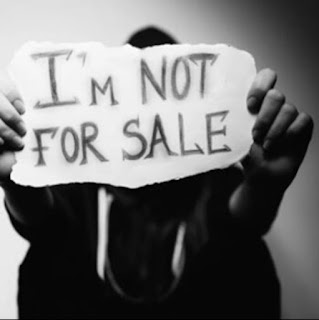
9. I also spoke with the man working with the Reformed Compassionate Services about the dangers of human
trafficking during this refugee crisis. He agreed that it was a very real danger and gave me contact information about how I could ask about getting warning leaflets into the hands of the aid agencies. I will
follow up on this.
The European Freedom Network has prepared such a leaflet in Ukrainian, that can be
customized with emergency contact information according to whatever country it is used in. At this point we
are thinking that it will need to be in four languages - Ukrainian, Russian, Hungarian, and English – and we
are working to get the necessary translations. We are hoping to get this printed and out for distribution as
soon as possible this week.
The English text of the leaflet follows: We are with you! We are sorry that you are going through these difficult times. We want you to be safe,
that's why we want you to know that not all people are what they seem to be. Trafficking in human
beings hides behind a friendly face and makes false promises to people in vulnerable situations. Some tips
to be safe
1. Protect your IDs. Don't give them to anyone.
2. Don't give anyone your personal phone.
3. Wherever you are, register in the authorities' databases.
4. If you choose to stay elsewhere than accommodation provided by non-governmental authorities
or associations, please notify the authorities about your location.
5. In case of emergency or suspicion, please notify the authorities.
Regarding financial support for relief efforts:
Josh Fajardo and I met with our Regional Directors today to assess the implications of the war in Ukraine and the
refugee crisis in the surrounding countries.
One question that we are getting from churches in both the U.S. and the U.K. is how can relief funds be received?
Gerry McNamara has been in close contact with people on the ground in Rivne, Kyiv, and other localities. The
banking system in Ukraine is under heavy stress. So far funds that have been sent to Ukrainian accounts have been
received, but more and more bank machines are either being destroyed or running out of money, which is not being
replenished. On top of this, many shops and businesses are no longer accepting the Ukrainian currency (the grivne)
but only accept euros or dollars.
Because of this, we are recommending that relief funds NOT be sent to our Ukrainian bank account. Instead, our
recommendation is that funds be sent to the Bishops' Crisis Response Fund, and we will recommend how those
funds are to be disbursed.
We will be getting daily updates about funds received and will be in a position to advance
the funds from our Hungary mission account and get reimbursed from the Bishops’ Fund.
We are in the process of
developing a plan to get euros or dollars from Hungary into Ukraine and to our people there. Fortunately, we had
proactively instructed our people to keep a cash reserve of U.S. dollars, so their immediate needs are being met. We
are also developing accountability protocols for any relief funds that are received and disbursed.
It may develop that relief funds to assist with refugees will be needed in Hungary, Romania and potentially in
Bulgaria (if refugees come in by sea). Support for these efforts should also be directed to the Bishops’ Crisis
Response Fund.
We are currently investigating possible collaborations with the Nazarenes, the Hungarian Methodists, and the
Salvation Army. At present we are focusing on collaborating with the European Freedom Network to publish and
distribute the warning leaflets.
Please do not hesitate to contact us with any questions or concerns that you may have.
Thanks for your continued prayers during these perilous times.
Larry Winckles Europe Area Associate Director Free Methodist World Missions Budapest, Hungary
JFM's Global Outreach partners in Hungary